Wednesday, 7 May 2014

Fire and Forget

I first came across this term when I was reading up on our local arms manufacturer, MBDA, whose main line is a chilling range of missiles. There's an early use of the phrase in a 1984 article in which we can read: ' "Fire-and-forget," also known as "launch-and-leave" or "shoot-and-scoot," depending on who is pulling the trigger, refers to weapons that need no further intervention once fired. ' (see http://cs.stanford.edu/people/eroberts/cs201/projects/autonomous-weapons/articles/fire-and-forget.txt )
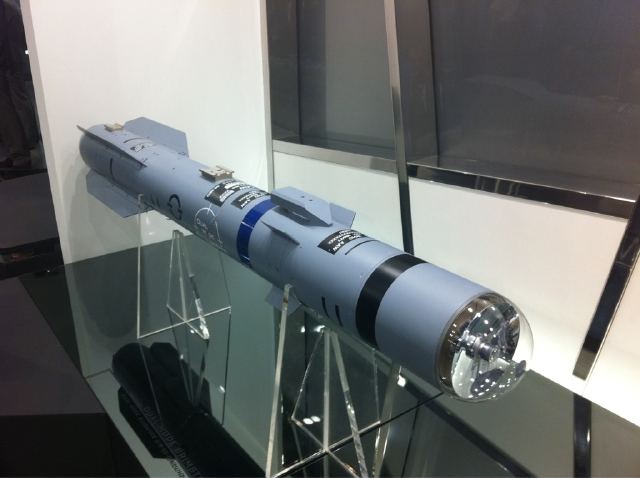
Brimstone missile, produced by MBDA, at the DSEi arms
fair in London, 2011
High-tech weaponry of the 'fire and forget' kind is attractive to those involved in warfare; as Wikipedia states... [such a weapon] '... can hit its target without the launcher being in line-of-sight of the target. This is an important property for a guided weapon to have, since a person or vehicle that lingers near the target to guide the missile (using, for instance, a laser designator) is vulnerable to attack and unable to carry out other tasks.' (http://en.wikipedia.org/wiki/Fire_and_forget )

But what else lies in that term, 'fire and forget'? It is a profoundly troubling concept in many ways, hinting at an over-reliance on technology and disregard for the human consequences of that technology's use. This is probably at the heart of the level of concern and opposition to the use of Drones. As touched on in my previous piece, the ability to distance oneself from the 'enemy' emotionally (to forget their humanity) makes it easier to take their life. The trouble is, those who are on the receiving end cannot forget, and each time a life is lost through violence there will be another legacy of hurt. This won't inevitably lead to more violence, but it's clear that it can - and often does - feed into such a cycle.

In place of fire and forget, we need to respect and remember the worth of all human beings, to remember and learn from the past... and to use technology to reach out rather than to set coordinates.

Tuesday, 6 May 2014

Distance.... Empathy

Once you've walked a mile in another person's shoes then you're a mile away and you have their shoes! Or so goes the witticism I heard on the radio a year or so ago. The key point here is that violent conflict – or indeed the structural violence of economic injustice – are at least in part made possible if those responsible have either a physical or emotional distance from the victims of violence. It becomes easier to kill or to prepare to kill another person if they are seen as 'the other'.

During the cold war the iron curtain, whilst not existing as a physical entity, was very real in creating a barrier to communications and the most basic of contact between the peoples of east and west. Growing up during that period, the gradual opening up of channels – such as through Quaker East-West exchanges and visits – sometimes felt like a real revelation; what the ordinary person in Britain knew about the lives of ordinary people in the Soviet Union (and vice-versa) was so limited.

Much of the armed conflict during the first world war saw armies facing each other for months on end with only a small physical distance between them. The famous Christmas Truce in which British and German soldiers played football and exchanged gifts in no-man's land is a powerful story in that it shows so simply the irrelevance of the battle-lines when it comes to simple bonds of common humanity.

It has always been in the interests of some of those in power to promote the idea of one group or nation as 'the enemy', sometimes in order to support the case for going to war and at other times, as we have seen more recently in the UK, to justify uncaring economic and social policies. Our Advices and Queries, however, point to a different way:

“Are you alert to practices here and throughout the world which discriminate against people on the basis of who or what they are or because of their beliefs? Bear witness to the humanity of all people, including those who break society's conventions or its laws. Try to discern new growing points in social and economic life. Seek to understand the causes of injustice, social unrest and fear. Are you working to bring about a just and compassionate society which allows everyone to develop their capacities and fosters the desire to serve?”

and

“In what ways are you involved in the work of reconciliation between individuals, groups and nations?”

In many respects, it is now easier to break down the barriers of understanding between different communities, people and nations, with communications technology providing a means of information-sharing that is mostly a lot more democratic. It is harder for government's to persuade us that nation / group 'A' is the enemy. Or is it? The situation between Ukraine and Russia shows how difficult, but also how important, it is to get a proper understanding of the needs and fears of the different populations. It is very clear that the media are being influenced and manipulated by politicians from east and west to support their particular approach. And non-governmental groups of all persuasions can and do use web tools to promote misunderstanding and fear of the other for all sorts of reasons; a real challenge.

From the individual to the multi-national levels, empathy is a key factor in developing better mutual understanding. A particular difficulty is that it is easier to empathise when you don't feel threatened yourself. Empathy is one of the building blocks of the Alternatives to Violence Project (AVP) and in one of their resources (http://thetransformer.us/08-3.pdf) we read:
“In order to break through the walls of our self-made prison—revealing who we really are and our natural ability to empathize—we need to feel a high level of safety. With this level of safety, we can now risk being vulnerable enough to lay down our assumed identity. When you lay down your identity, you are left with your humanity; and from this place of common humanity, you can experience true connection with others. This is when transformation occurs. AVP creates this level of safety through the development of community.”

It's all easier said than done; our different life experiences as individuals and as communities mean that each of us will respond in our own way and have our own outlook. Those used to leading privileged and comfortable lives (myself included) will always find it hard to really know what it means to feel the reality of constant hardship or discrimination. The basis of Quakerism is to seek that of God in others, to encourage listening and a search for truth together; this surely is a precious foundation on which to build activities that create bridges across divisions of understanding.

Conscientious Objection - and a Culture of Peace

I'm part way through a short sabbatical and am very grateful for the support from NFPB in giving me this opportunity to take a breather from the busy-ness of the work.  I've begun to jot a few thoughts to get this alphabet blogging exercise moving again.

This year we shall be hearing a lot about conscientious objectors and about the principle of conscientious objection. On 15th May, International Conscientious Objectors day will have added poignancy this year, with thoughts going to those who chose not to fight when conscription was introduced during the first world war. It is clear from both world wars that this was not plain-sailing for those already in the Society of Friends – individuals' choices led them both to leave and to come into the Society of Friends, the former being those Friends who decided to enlist and the latter who could not in all conscience take the life of another person.  For many others already within the Society, its support - such as that shown by NFPB - in practical and spiritual ways, was crucial in sustaining and supporting them.

White carnations representing CO's around
the world, past and present, at a Manchester
ceremony a few years ago.
The Quaker peace testimony has never been easy. It has, over the years, been in a key expression of what it means to be a Quaker and for this reason the Society of Friends has been a place that has attracted those whose own beliefs and convictions were at odds with those of the community or faith group to which they originally belonged. It is assumed that those joining the Society of Friends will share a commitment to peace in general terms; what each of us is conscientiously led to do about that will vary. It isn't just about the extraordinary choices that people have to make during wartime. Peace, as Friends have come to understand it, is also about positive action. What conscientious commitment can we make to building peace today? What can we conscientiously affirm about peace?

The first decade of this century was named by the United Nations as the Decade for a Culture of Peace. That was easy to forget, with wars in Iraq and Afghanistan exacting such a heavy toll throughout the period. But work was done to explore and promote the concept. A culture of peace could be seen as a whole set of values, ways of living together and approaches to dealing constructively with conflict. It is a concept that can open up many doors to action, from nonviolent resistance to community bridge-building and developing personal capacities for peace-building.

Logo for the Decade for a
Culture of Peace
As a Society of Friends, we have many of the ingredients to hand that could be key components of a culture of peace. We can't take these for granted though and must continue to work on developing and learning what it means in practice to be a community committed to peace. And we can rejoice in the fact that we are not alone; one of the things that the Decade highlighted was the spread of peace initiatives in many areas of life throughout the world. We have much to give, but also much to learn and to gain from others.

Monday, 24 February 2014

Anti-war, alternatives and being there

I’m arriving late into the Quaker alphabet blogging exercise, but hope this won’t trouble readers unduly. As is apparent, this blog has been on the quiet side recently; so this seems a good opportunity to meander through some reflections on peace action and witness from a Quaker perspective. 

As an opening offering, I am very aware that those involved in peace concerns are easily labelled as being ‘anti-war’ and as ‘activists’. Both of these terms come with their own baggage. NFPB itself has been shaped by its first thirty two years and the experience of two world wars and Quaker individual and collective dissent and opposition to these wars. It was and is emphatically ‘anti-war’. But to be anti-war has never been enough; peace is about living a different way in relation to our fellow human beings.

Activist - helpful or not? Most of us probably have an image of someone who is particularly motivated and active in campaigning, from writing letters, to joining demonstrations of different sorts, to organising meetings etc. But, rather similarly to the above, these particular forms of action that express our peace convictions are certainly not the be all and end all.   Which brings me to a third A - Alternatives. If we are living ‘in... that life and power that seeks to take away the occasion of all wars’, what does this look like in positive terms? Different things to different people, of course, but without some sort of sense of an alternative way of living together, of engaging with conflict and of promoting peace, anti-war activism can feel very sterile.  

One of the positive things about Quaker peace work is that it embraces the range of witness and activity along the spectrum, from advocacy at international and national institutions to more radical direct action and to active promotion of peace-skills, such as through the Alternatives to Violence Project. We can feel encouraged by this variety, recognising what different people can bring at different times and in different places as having their place.
---
I’ve already mentioned the baggage that comes with a lot of peace witness; let’s just park that.  

Bolshie: those who wouldn’t serve in the military during war time were known for being a bolshie lot, those of the WW1 period being described by Jeremy Paxman as cranks. Let’s hear it for the bolshie, cranky Quakers! Where would we be without them? (incidentally, I’d like to take this opportunity to say that, contrary to what the Mirror headline said, I don’t see myself as having ‘blasted’ anyone - I was simply asked for a comment on Jeremy Paxman’s programme and gave it, without blast or bluster.)
 
Being there: some of the most inspiring and powerful witness is as simple as that - just being there, witnessing. Friends gather together regularly outside military bases, sometimes in worship, at other times with a more emphatic political message - such as the weekly witness by CAAB at Menwith Hill

Being there is also important in times and places of conflict; from the Ecumenical Accompaniment work in Palestine and Israel to the earlier work seeking to build east-west understanding during the cold war. There is a purpose to such work, but the outcomes are often very long-term and so not always easy to measure. Sometimes being there can be an important act of witness to human rights abuse; it can also create opportunities for conversation or dialogue. And at other times, being there, alongside others, is an important act of solidarity, expressing our commitment to one another as human beings even if we don’t have all the answers.

Finally, coming out of our centenary year last year, I have a strong sense of the value of long-standing organisations and groups ‘being there’, continuing the questioning, the seeking, the exploring of new ways of contributing to peace in the world.

Tuesday, 9 July 2013

Walking and witnessing for peace

On 30th June, nearly 70 people gathered in the grounds of Richmond Castle for a Meeting for Worship. Sixteen of these were members of a group walking over the following 5 days to Menwith Hill, also in Yorkshire, marking the centenary of Northern Friends Peace Board. Others at Richmond that day came from Quaker Meetings over a wide area of the North. Some had a chance to visit the exhibition that English Heritage have created that records the story of the Richmond 16 , conscientious objectors (COs) imprisoned at the Castle during the first world war.

Marjorie Gaudie, whose father in law Norman Gaudie, was one of the COs, was present with other family members and for who the story is of particular personal significance. Local journalist Sarah Hartley recorded the event in words and images: http://www.youtube.com/watch?v=QUM5OyK0dQM

Walking from Richmond, the walkers were joined on all of their days of walking, by supporters, Quakers and non-Quakers. On our first day, walking through the training area for Catterick Barracks to the south of Richmond, we enjoyed the company of members of the Pilgrimage for Justice and Peace from Iona to London. We were pleased to give them a letter of greeting and support the previous day when we all found ourselves travelling through York.

Each day of the walk concluded with a period of worship, discussion and social activities for the walkers, accommodated throughout at Bivouac , located about half way along the route. Friends shared their stories and experiences, reflecting on the nature of peace action and its spiritual roots, and rejoiced in the beauty of the countryside through which we walked. Music and song sometimes brought our evenings to a close.

We were encouraged and humbled to be joined by people from some distance away, our ‘community on the road’ benefiting from the conversations and company of others.


Our last day was boosted by a significant number of extras and culminated with our joining the peace protest at Menwith Hill, organised by CAAB and marking Independence from America on 4th July. Our arrival and visible presence amongst others at the gates of the US electronic communications and surveillance base was a powerful statement of Quaker concern.

A real sense of community was built up during our week, underlining the fact that peace is not just saying 'no' to war, but also about valuing life in all its diversity. Peace begins with us.

Wednesday, 26 June 2013

Walking the walk

We're now in the final few days before our Walk of Witness - 'Walking the Walk', which will see a group of sixteen walking from Richmond Castle to Menwith Hill, both in North Yorkshire.

The significance of the locations?  In 1916, sixteen conscientious objectors were imprisoned at Richmond for refusing to put on a uniform and serve in the army. They were taken by train to France, where they were to be shot if their refusal continued.  (read the story in www.fredsakademiet.dk/tid/1900/1916/maj/richmond_sixteen.pdf That this didn't happen is probably due to a note being passed out of their train as they traveled through York, which then alerted local MP Arnold Rowntree.

Our walk will end five days later as people from all over the country gather at Menwith Hill for the Independence from America demonstration. We also now know more about what the NSA does as information has come to light, not through a note passed from a train window but through the actions of whistle-blower Edward Snowden. And there is growing concern about the promotion of military involvement in schools, armed forces events etc. The need for peaceful and determined Quaker witness does not seem to have diminished.

Peace witness is not just about these most alarming aspects of militarism and secrecy, however. The walk will commemorate the many ways in which Quakers and others connected with Northern Friends Peace Board have worked, promoting disarmament, justice, equality, dialogue, nonviolence, bridge-building and the many and varied foundations for a peaceful world.

We hope to post updates of the walk on this blog and via social media - find us on:
www.facebook.com/NFPB1 and http://twitter.com/nfpb1


Thursday, 28 February 2013

Shaken and stirred

Following on from my previous post, we're now preparing for our NFPB members' meeting, to take place in Sheffield on 9th March.  Our speaker in the afternoon will be Ian Sinclair, whose book 'The March that Shook Blair' has just been published by Peace News.  As well as thinking about that particular London demonstration, NFPB members were of course active in other parts of Britain at the time. 

On 22 February 2003, on the occasion of our 90th Anniversary, NFPB met in Preston and minuted:

We have been inspired and moved by our recent shared witness for peace in Iraq. It has been disconcerting to find ourselves in the majority in our witness and we have celebrated the experience of unity with large numbers of people from a wide range of backgrounds across the UK. We have acknowledged the challenges this brings, especially where we are part of coalitions where we find it difficult to unite with all of the views expressed, or all of the actions planned and taken.

We have reminded ourselves of the spiritual source of our witness, and of the significance of upholding in prayer all those involved. We recognise the importance of our holding faith that love can make a difference, and believe that public opinion has already influenced the delay in starting hostilities, and the language being used by our leaders about the nature and length of the proposed war. We have recognised the importance of making our witness visible in our communities, coalitions, press and governments. We can make a particular contribution in upholding those who are working for peace, supporting the growing yearning for peace that we are seeing across the world; and in promoting and sharing information about peaceful alternatives as widely as possible. We believe we are called at this time to hold all people in the light and to seek to find what love can do.

Thursday, 14 February 2013

Marching for peace – then and now

[article published in The Friend, 14th February 2013]

by Philip Austin

NFPB banner and supporting Friends
in London, 15th February 2003
The diverse group with whom I traveled to London on 15 February 2003 got nowhere near Hyde Park and the speakers. This was due to the sheer numbers of people with their banners gently shuffling on their way. As well as those on the street, there seemed to be support from people in buildings all along the route. Two questions I have heard asked many times since then are: what happened to all those people (probably at least 1.25 million ‘marching’ in London alone) and since then, why didn’t they continue protesting? The other, bigger, question is whether the march – and the others around the world that day – made any difference.

The March That Shook Blair, by Ian Sinclair, is to be launched at Friends House this week. The book explores, through oral history, both the nature of this anti-war coalition and the effectiveness of the march. The themes were also addressed at a conference in Friends House, organised by the Stop the War Coalition, on 9 February. It is argued in the book and by speakers at the conference that the scale of public opposition to the UK’s involvement in the invasion of Iraq brought our government very close to pulling out of the whole enterprise. Further, that it introduced a greater appetite for holding politicians and others to account that has continued in, for example, scrutiny of MPs’ expenses and the direct-activism of UK Uncut. If marching is only partially effective, there are many different types of action for change open to us.

I met a small number of Quakers at the anniversary conference, which attracted around 1,000 people, filling up a good portion of the Large Meeting House. Friends have often found the style of doing politics within the Stop the War Coalition unhelpful. The programme was congested, and there were speakers aplenty. Tony Benn spoke briefly but, sadly, seemed very frail. A familiar analysis cropped up time and again in these talks, more often than not focusing on imperialism by the US and its allies and the role of working people in resisting this. Interestingly, it seemed to be left mainly to speakers from the US and Canada to make the connections between anti-war campaigning and the need for action on climate change.

Salma Yaqoob, who has become one of the more familiar faces of the Stop the War Coalition, emphasised how important it was that British Muslims had been included from the outset. She spoke of the 2003 march being about common humanity, giving many Muslims a sense of belonging in British society for the first time. There is continuing prejudice, however, and civil liberties have suffered, nationally and globally. We were reminded by Victoria Brittain of the continued confinement of prisoners at Guantanamo Bay. The use of armed drones, about which concern is growing and spreading, was the subject of a packed separate session.

The wars have been waged at terrible cost, in financial and human terms and in creating hurt and resentment that will continue for years to come. Speakers from Iraq and Afghanistan brought this home. There were repeated calls at this conference for renewed campaigning and activism to challenge current and future military ventures.

For Friends, being pro-peace and looking at the conditions for building peace and justice has long existed alongside an anti-war stance. This is an important aspect of our testimony and, I believe, helps sustain longer-term involvement. The marches in 2003 were anti-war, loud and clear, but many also felt on the day that they were part of a powerful expression of humanity – a humanity that cares – in all its diversity. This continues to give me hope.

Thursday, 7 February 2013

On reaching our centenary year

When, a couple of years ago, NFPB members began to think about the centenary of NFPB they were clearly excited by the opportunity it seemed to present for celebrating the work that has been done and raising our profile. Since then, a small group has met every few months to sift through the ideas and put together a coherent programme of activities and resources.

There is still some way to go before all of these come to fruition, but this year - the centenary year itself - we were pleased to be able to put on a celebratory afternoon and to present our booklet and 10 panel display that summarises, in words and pictures, the spread of work and witness Friends have undertaken in our name.  

The event was also an opportunity to bring together past and present NFPB members and workers, supporters and interested enquirers.  For me, having worked as Co-ordinator for 22 years and already knowing all my immediate predecessors, it was something akin to a grand family reunion.  

Below this, is a short news article I wrote about the piece for our website. A page of information about our plans for the year can be found at http://nfpb.org.uk/projects/centenary/nfpb-centenary-related-activities-during-2013

Perhaps the turning point for me in preparing for this year was the day I and a colleague spent in Leeds, going through and making notes from as many annual reports we could.  Whilst some of the text is inevitably prosaic and descriptive, there are more personal / spiritual reflections throughout.  Cumulatively, the work is inspiring and impressive in its scope.  Some of the more reflective text is profoundly moving, giving a good feel for the passions, challenges, insights and vision that has driven Friends’ collective and individual passions for this particular piece of peace work.


Cake, memories, friendships and looking forward

Northern Friends Peace Board marked the centenary of its formation with a party at the newly refurbished Manchester Meeting House. Set up after a peace conference of Quakers in the North in January 1913, the Board has undertaken a variety of work with and for Northern Friends, supported by funding and representatives from throughout the North of Britain.

The gathering in Manchester was reminded of the early challenges of the first world war and of supporting conscientious objectors through to the cold war and more recent conflict. The 70 Friends present also heard how the Board’s work had encompassed broader aspects of peace, recognising the roots of conflict in injustice, for example. Past staff and members joined with those involved now and invited guests. The first Secretary of NFPB, Robert Long (serving from 1913 to 1942) was represented by three of his grandchildren.

A pack of materials relating to the centenary is being prepared for Meetings, which will include a booklet launched on the day of our celebration. An accompanying exhibition was also on show and will be available in a variety of formats for Friends to use.


NFPB members present at the gathering spoke of their appreciation for all the service that Friends have given to the Board over the years, of getting a better sense of the significance of its work and an eagerness to engage with Friends in discerning priorities for future work and witness.
Information about activities and resources relating to the centenary is being regularly updated on NFPB’s website at http://nfpb.org.uk/projects/centenary


Monday, 13 August 2012

Curiosity and conversation

At our most recent event, taking place in Manchester in July, more than 40 people came together to learn more about dialogue, each having the chance to be part of two different workshops.Much of the potential of dialogue in society has still to be realised, concluded a report from Lisa Cumming and Ute Kelly from Bradford’s department for Peace Studies in 2010 . A good range of initiatives have been developed over the last decade, however, some of which have contributed workshops at Northern Friends Peace Board events under the theme of Building Peace in Diverse Britain.

One of the organisations we invited on this occasion was Talk for a Change who have recently published findings that in some way take up the baton from the earlier report from Cummings and Kelly. In ‘We need to talk about….’, they ask “Can discussing controversial issues strengthen community relations?” That dialogue is not just a superficial exercise in problem-solving can be usefully summarised by these couple of sentences from the report:
Perhaps our deeper purpose is to help people to open their hearts and minds to hearing different and oppositional ideas and beliefs, and to see things from another’s point of view. We aim to allow a little air and light into a discussion, to be prepared for confusion and strong feelings, and to give time for people to find their way towards change.
Raj Bari and Jo Broadwood from Talk for a Change led a workshop that opened up discussion around some of these ideas, as well as facilitating a simple exercise in developing a better understanding of a situation causing someone difficulty.

Justine Huxley, of St Etheleburga’s Centre for Reconciliation and Peace , brought a workshop that explored the power of narrative in dialogue, inviting us each to undertake an exercise that began to shed light on our own personal stories. St Ethelburga’s works particularly in an interfaith context and has done a lot of work on creating safe spaces for dialogue. A way of approaching difficult dialogue that Justine shared with the group was that of ‘Disagreement Success’. In the accompanying handout, we read: “
If our response on encountering a difference which disturbs us (i.e. a threat) is to start by taking a side, we have taken the first step to allowing polarisation to lead us into conflict. An alternative strategy is to develop curiosity about the nature of the disagreement and about our own and our opponents’ positions”.

The day was enriched by live music during our tasty vegetarian lunch, by the comfortable and bright surroundings of Manchester’s Cross Street Unitarian Chapel and by the eagerness to share and to learn from workshop leaders, NFPB project volunteers and participants. Thank you to everyone involved.

Monday, 28 February 2011

Energy and inspiration


Our new logo received its first public airing on Saturday, as Northern Friends Peace Board members travelled from throughout the north of Britain to get together in Chesterfield. There was a real buzz throughout the day; not just because of the logo, but also from the reflection, discussion, conversation and companionship. The warm welcome and enthusiastic participation from local Friends all helped too - more visitors than I can recall at one of our meetings for a long time. We were also joined by Laurie Michaelis, of Living Witness (also now with a new logo and website), Jasmine Piercy, wearing a Living Witness hat as well as Quaker Voluntary Action and visiting us from the depths of Somerset. Sunniva Taylor of QPSW's Sustainability and Peace programme was with us too, contributing valuable background to current Quaker work on sustainability. Our work in groups on different aspects of the theme was stimulating and challenging; I've yet to write it up, but I think we'll be able to identify some clear strands of concern from that exercise.

In the afternoon we shared news and information about our own work; the work is progressing well, but we'll need to put more energy into fundraising over the next few years. If you want to, you can support us online .

We also had a powerful half-hour session reflecting out of worship on the tumult and transformation taking place at the moment in the Middle East and North Africa. Friends reflected on the foundations for positive nonviolent action that many had been able to build on. Gene Sharp got more than one mention during the day, with his decades-long work on understanding nonviolence (see http://www.peacemagazine.org/198.htm) now getting wider recognition throughout the world.

I think our new logo reflects the energy and forward-looking feel of our gathering on Saturday. I hope it serves us well in reaching out and communicating the nature of our work and of the community of committed and loving Friends.

Sunday, 23 January 2011

Peace and war - love and awe

I’m now beginning my 21st year of working for Northern Friends Peace Board. This also coincides with the beginning of the first Gulf War and the birth of our first son. I have a strong memory of feeling his movements one morning as he fidgetted around inside his mother whilst I listened to the radio news coverage in which a reporter was likening the bombing of Bagdad to a firework display. We would more recently be presented with the term ‘shock and awe’, and these twin emotions were certainly with me that morning. Shock at what was unfolding in Iraq and awe at the prospect of becoming a parent in just a few weeks.

I heard recently of the term ‘Awe and wonder’, which is used in the educational world to describe a goal of encouraging imagination and awareness amongst children. Imagination is so important in our lives together. William Penn set the simple challenge to ‘Let us then try what love will do’. Love and our attempts to put it into practical action, are for me at the heart of what peace work is about and at the heart of what being a parent is about.

Alongside love, I am in awe of the great potential and example that so many ordinary people have shown me for making creative contributions for a better world. But also in shock at the continued capacity for hurt and for uncaring that manifests itself from the personal to the global scale. I give thanks for those who have inspired and supported me over the years in this work, ensuring that it is rooted in love and awe and still able to be shocked.

Wednesday, 10 November 2010

Don't mention the pot plant

Someone once suggested that the neglected pot plant on the window sill in the office could be described as a depleted geranium. I think it may be time to throw it away - the joke and the plant. But clearing up land that has been on the receiving end of depleted uranium ammunition is a far more costly, as we heard at a talk in Manchester last night. Dave Cullen, researcher for the International Coalition to Ban Uranium Weapons, gave an account of the findings from a fact-finding trip to the Balkans earlier this year. The report, "A Question of Responsibility - the legacy of depleted uranium use in the Balkans" was published just a month ago, says the following:

"The circumstances that always surround the use of DU (i.e. conflict) mean that we should never presume that states will be able to deal with assessing the problem, conducting studies or decontamination. In both the use of uranium weapons, and decontamination, a precautionary approach should prevail. There is a clear need for transparency over the use of uranium weapons, and for technical assistance with decontamination. International help with these matters should be targeted to increase capacity in the region and strengthen links between researchers. "

Campaigners have been working internationally for a UN Resolution on this issue, and there's currently a UK Parliament Early Day Motion (825) "calls on the Government to support the resolution to be put before the UN General Assembly this autumn calling on states to provide quantitative and geographical data on DU munitions use to the relevant authorities of the affected states. " Similarly, a Motion that has been put before the Scottish parliament echoes these sentiments.

And on Friday 12th November there is to be a protest outside the US Embassy in London, demanding transparency about where DU weapons have been used and of research into their health consequences.

Thursday, 28 October 2010

Response to Strategic Defence and Security Review

Here's a piece that The Friend has just published

Is the Ministry of Defence even thinking about ‘Peacing together the world’?


Philip Austin of the Northern Friends Peace Board looks at the Strategic Defence Review

‘Peacing Together One World’ was the theme for last week’s One World Week. I don’t imagine the Ministry of Defence (MoD) had this in mind when they decided on the publication date for their National Security Strategy and their Strategic Defence and Security Review. These have been picked over and analysed by others – we all know the headlines of aircraft-less and oversized aircraft carriers, of fears of cyber-attack and so forth. I can’t have been alone, on hearing the headlines, in thinking that while there are some points of encouragement, so much remains ‘business as usual’.

Postponing until 2015 the decision about replacing Trident is welcome, although spending on maintaining the existing (if slightly reduced) nuclear weapons system continues at a high level. The next few years will be an important opportunity for Friends and others to strengthen the dialogue with decision-makers on the issue. While the empty aircraft carriers will be a very visible sign of the folly of much of the thinking in the review, a decision in 2015 not to replace Trident would be an inspiring breakthrough. Can our politicians be encouraged to take such a bold step?

Our peace testimony is about how we relate to one another, how we deal with conflicts without weapons and how we work for justice as a condition for peace. Much of the thinking behind the MoD’s recent documents seems to be shaped by what academics within the Oxford Research Group have called a ‘control paradigm’ – protecting the nation’s interests by making sure that others are kept at bay through use of power. The alternative, a ‘sustainable security paradigm’, views security as being founded on economic, political and environmental justice and on disarmament. Building these up is a long-term process. The government’s security strategy paper does indicate that environmental and resource issues are part of their national risk assessment. It is a pity, therefore, that so many of the recommendations are still based on exerting and asserting power rather than on foundations of security-through-interdependence.

I have been working with members of Northern Friends Peace Board (NFPB) on a statement of concern on sustainable security; we plan to support and encourage Friends in thinking about and taking action on this. NFPB is also working on building peace in our own communities, with the help of a Joseph Rowntree Charitable Trust grant. The cost to our country’s social fabric of misdirecting resources to expensive and useless weapons whilst removing massive chunks of the welfare state and of voluntary sector funding is going to be painful and distressing for many. I am learning of more people facing such challenges locally each week.

Our communities and our world are made more secure when we focus on shared interests, on caring for one another and on just relationships, as our starting point and as our goal. We are facing difficult challenges; all the more important, then, to remind ourselves of William Penn’s encouragement to ‘Let us then try what love will do.’

Tuesday, 26 October 2010

Sustainable Security - statement of concern

NFPB members have been working on a statement of concern recently. The following is the text they have agreed and which we 'officially' released to the wider world last week. It is followed by some questions, which we hope will encourage discussion, reflection and action. And on our website (at http://nfpb.gn.apc.org/sust_sec ) are some links to a range of organisations and information sources for those wanting to follow this up in more depth.


Sustainable security
~ ~
A statement of concern

October 2010

We are in this world together but the way we are living is unsustainable; this makes the world less secure. Our consumption of consumer goods and our dependence on fossil fuels - using finite natural resources and producing ever-more waste - continue to grow. This in turn contributes to hugely destabilising climate change and to unbalanced and unfair economic relationships: where inequalities exist, conflict is inevitable. The interests of those whose power comes from the control of diminishing resources are protected by ever-more costly military and other technology as a mistaken means to building security.

Sustainable security means ensuring a secure future for all based on tackling the causes of conflict and insecurity: understanding the real threats and how they can be dealt with so there is peace and justice for everyone throughout the earth for the long term and striving for a balance with nature.

As Quakers, we have a respect for all of humanity and for other living things. The Quaker peace testimony has always been about seeking to address the causes of war as well as about how we respond to conflict without resorting to violence. Our testimonies to equality and simplicity are similarly about ensuring that all people be enabled to flourish and live.

We know that some conflict is inevitable. We know too that we can choose to develop understanding as to how we contribute to causes of conflict, and in how we respond to and deal with this. Do we accept the short-termist, market-driven approaches that drive resource misuse, inequality, instability and conflict?

It can be easy to feel despondent and fearful. But we can use these emotions in a positive way, to help motivate us in working together to develop a vision of alternative ways of being together on this planet. We depend on all life. It is vital that we recognise that all have the same rights to security and well-being, and that we change from a society driven by perceived wants and fears to one that addresses the real long-term needs of all. Our unsustainable way of living on this planet grows from a mindset; a change is needed to this mindset to underpin the many encouraging practical steps that people are already taking towards more sustainable and equitable ways of living.

We are called to ask questions to promote dialogue and action. We ask that politicians and others in positions of influence and power - including businesses and media organisations - recognise this moral imperative and work together, responding in words and in action to create sustainable security for all.

Questions for discussion, reflection and action:

  • What makes us secure in this world?

  • How can we move from a world driven by the struggle for power and control over the lives and resources of others to a world based on equality and respect for all life?

  • How can we support one another in building that alternative?

  • What resources can we draw on to help ourselves and others deal with pressures of change in ways that are peaceful and build sustainable security?

  • What are the political and practical consequences of this?

  • What opportunities can you take to raise these concerns with others and to take positive action for change?

Wednesday, 11 August 2010

Inspiring people - past and present

I learned today that Elise Boulding died in June, at the age of 89. It was my great privilege to be part of a three-day workshop she ran in 1991 on Imaging a World Without Weapons. This, and her book on "Cultures of Peace: The Hidden Side of History" have inspired me in many ways since. More widely, she played such an important role in developing peace studies and in the peace movement generally- I think many of those who never met her also owe a great debt of gratitude. There's an interview with her here.

This past week I have also had opportunity to meet and be inspired by another brilliant thinker and actor for peace: Rajagopal P.V., founder and director or Ekta Parishad, the Indian people’s movement dedicated to non-violent principles of action. He spoke and led workshops at the QPSW conference on 'What do we mean by peace?' last week, and then at a packed meeting at Manchester Meeting House on Sunday afternoon.

Both combine/d vision, clarity of thought and passion with a wonderful humour, honesty and inspiring faith in the potential for humanity to make the world a peaceful and just place to live. Thank you too all those who inspire me in these and in so many other ways.

Friday, 26 March 2010

General election

We've produced our own short briefing for Friends and others in advance of the General Election, with suggested questions for candidates read it here: . It covers: Afghanistan, Nuclear Weapons and Disarmament, Building Peace in Diverse Britain, Resources and Climate Change and Young People and Peace. We've also created a page of links to other related election resources.

At our Representative's meeting last weekend we had a helpful reminder of how challenging it can be for candidates to respond in detail to questions put to them in the period leading up to elections - due to pressures of time and to the need to be properly briefed on the range of issues. We don't expect anyone using our questions to put them all to candidates, but rather to seek opportunities to ask for short answers to at least some of them. This may be face-to-face - at a hustings, for instance - or in a letter or email.

We hope that the issues mapped out in our briefing might also be a useful way into discussions with new MPs once they are elected - those who are new to the job might welcome dialogue with constituents who can provide them with information as well as asking challenging questions. NFPB will continue its own work, and at the same meeting last Saturday appointed new project groups to develop activities relating to these concerns.

PS: A footnote about comments - we were getting so much unwelcome 'spam' added to the comments section of this blog, that I have disabled this feature for the timebeing. If you need to get in touch with me, follow the contact details on the NFPB website: http://nfpb.gn.apc.org . Thank you.

Wednesday, 3 February 2010

Strategic defence review - a chance for genuinely fresh thinking

Today sees the publication of the Ministry of Defence's green paper "posing fundamental questions for the future of Defence ahead of the Strategic Defence Review (SDR)". In the press release, we read further that this "is the product of broad consultation within the Defence community." And therein seems to lie a difficulty - as has been said at various times, if the only tool in your toolbox is a hammer, then every problem can appear to be a nail.

A review of the role of military-based 'defence' in making the world a more secure place should surely look beyond the 'defence community' if it wants to ask really fundamental questions. A valuable publication that came out in the middle of January is "Security for the Common Good - A Christian challenge to military security strategies ", published by the Fellowship of Reconciliation, England and Pax Christi, the Catholic peace organisation. In this, they write...

• We call upon churches, dioceses, congregations, parishes, groups, and all individuals of goodwill, to join our appeal to build security for the common good where the pursuit of love and justice set the political, economic and social agenda.
• We call on the Government, as it undertakes its Defence Review, to use this opportunity for a radical evaluation of security policies. It is not enough to tinker with budgets, to choose between ‘boots or bombs’. Now is the time to redirect military spending, research and development into life-giving projects that address our real security needs today.
• We call on all political parties in the run-up to a General Election to reframe their approaches to defence and security in favour of security for the common good.

and conclude:

Today, in the midst of a global economic and environmental crisis, we need to jettison narrow self-interest and ever-increasing military spending in favour of a sustainable security strategy that puts the people – and especially the poor - at its centre.

Can we hope that the MOD and the government of whatever political hue will take the opportunity to answer not only the questions that come from within the establishment, but also those wider questions of how to make the world more secure? The forthcoming general election would seem to be an ideal time to probe candidates' views on this.

Tuesday, 2 February 2010

National peace networking event in Huddersfield

The Network for Peace is having its AGM outside of London for the first time. It's being hosted by Huddersfield Quakers ... see details below:

Network for Peace

Polling Day Plus One -
Where next for the peace movement?


Saturday 27 February
2.30-4.15pm
--
Public Meeting with guest speakers:

Lindis Percy (Campaign for the

Accountability of American Bases) and

Professor Dave Webb (CND Vice-chair).

Preceded by Network for Peace AGM at 1.30pm

(You are welcome to come at noon for a bring and share lunch)

Friends Meeting House, Church Street, Paddock, Huddersfield, HD1 4TR.

Map: http://tinyurl.com/ydtg21a

All welcome

Network for Peace, 5 Caledonian Road, London 9DY tel: 07794036602
email: mail@networkforpeace.org.uk website: www.networkforpeace.org.uk

Rethink Trident

On Saturday, our the Exec committee of Northern Friends Peace Board agreed to add their name in support of the Rethink Trident statement

Rethink Trident!

With Britain facing its biggest economic crisis since the Second World War and much debate on public spending levels and priorities, the country can ill-afford to be spending in excess of £76bn on replacing Trident with a new generation of nuclear weapons.

Britain's security needs are not met by nuclear weapons which can do nothing to combat the threats posed by global terrorism or climate change. The more that countries such as Britain justify their retention and replacement of nuclear weapons on the grounds of an uncertain future, the more likely it is that non-nuclear states will seek to use the same rationale to justify developing their own weapons systems.

Instead of wasting tens of billions of pounds on new nuclear weapons there are many forms of socially useful spending to which the funds could be put; combating child poverty and youth unemployment, providing affordable homes, investing in education and mental and physical healthcare as well as addressing the climate crisis, to name a few. Whilst some are considering cuts to these areas, it is instead Trident that should be cut in their place.

We believe the Government should cancel the replacement of Trident. This would allow for the existing skilled manufacturing base to be reorientated towards providing for the needs of a post-carbon future, with the potential for significant investment in green jobs.

The Government must be a leading participant in current global initiatives to significantly reduce holdings of nuclear weapons, with the aim of achieving a nuclear-free world. Cancelling the programme to replace Trident would have a transformative effect on the nuclear Non-Proliferation Treaty Review Conference in May 2010, greatly boosting the chances of agreeing a timetable for multilateral global disarmament.